Bali has always been a favorite vacation destination for many travelers. Recently, I spent a month digital nomad-ing here, visiting numerous attractions and enjoying plenty of delicious food. I absolutely fell in love with the vibrant vitality and the kind people here!
Below, I would like to share an essential Bali travel guide covering everything from visas, accommodation, and attractions to food recommendations, ensuring your trip to Bali is smooth and hassle-free!
Blog catalog
Things to Know Before Visiting Bali
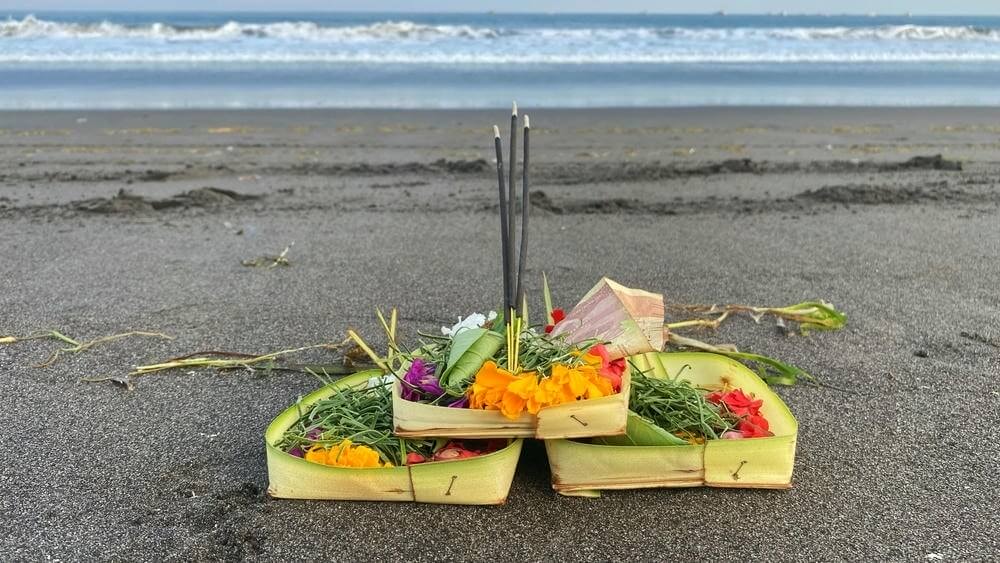
Where is Bali?
While visiting Bali, I realized many people might not know exactly where it is or ask if it is a country. Bali is located to the east of Java and is one of Indonesia’s most popular tourist destinations. It is also the only region in Indonesia that predominantly follows Hinduism. Unlike other Muslim-majority areas in Indonesia, you can eat pork here, and the religious customs differ slightly from the rest of the country.
Bali Visa
To enter Bali, you need to apply for an Indonesian visa. Currently, passport holders from many countries can enter via Visa on Arrival (VOA) or Electronic Visa on Arrival (eVOA). The eVOA must be applied for online in advance. Upon arrival, you simply scan the QR Code at the automated gates to enter.
If you opt for the standard Visa on Arrival, you must queue at the VOA counter upon arriving at Bali Airport. You will need to prepare the following three things:
- A passport valid for at least 6 months
- A return ticket or a ticket to another country
- Visa fee of IDR 500,000 (approx. USD $32) for a 30-day stay, extendable once
In addition to the visa, Bali has implemented a Tourism Levy for tourists. The fee is IDR 150,000 per person (approx. USD $10). It must be paid in advance via the LoveBali website or by downloading the App (iOS/Android). You will need to show the QR Code upon entry.
Bali Plugs & Adapters
The standard voltage in Bali is 220V. Since most modern phones, cameras, and laptops have built-in transformers, charging them directly is usually not an issue.
However, pay attention to the plug shape. While they use the two-pin round plugs common in Europe and some Asian countries (Type C/F), most outlets in Bali are recessed circular sockets. Universal travel adapters are often too bulky to fit into these recessed holes. I recommend bringing a travel adapter with a protruding design or buying one locally. I bought one on the street without bargaining for about IDR 50,000 (approx. USD $3.20).
Money Exchange in Bali
Aside from high-end restaurants and hotels, most places in Bali still prefer cash. Therefore, it is recommended to exchange a small amount of Indonesian Rupiah (IDR) before you travel, and exchange the rest in Bali for better rates.
When exchanging money in Bali, bringing US Dollars usually guarantees the best exchange rates (significantly better than other currencies). However, not all money changers accept all currencies, though popular tourist areas are generally fine. I highly recommend bringing USD for exchange.
During my trip, I found many places only accepted “fresh” USD bills (issued after 2000/2006) that are crisp and unblemished. Also, larger denominations ($50 or $100 bills) get better rates. Sometimes the rate posted outside differs from what you get inside based on the bill’s condition and denomination, so bringing new, large bills will get you the best deal!
It is also worth mentioning that you should not exchange money at unauthorized spots. Look for shops marked “Authorized Money Changer” for peace of mind. Always count your money clearly in front of the teller before leaving, as there are stories of tourists being short-changed.
Internet in Bali
Although most hotels and cafes in Bali provide WiFi, having your own mobile data is much more convenient for navigating between attractions. This time, I used the Holafly Bali eSIM. Since it offers unlimited data, I could look up attractions and watch videos without worry. It even had a signal in some of the more remote spots, though I still switched to WiFi at the hotel for faster speeds.
Best Time to Visit Bali
The best time to visit Bali is from May to September, which is the dry season. The weather is sunny with low humidity, but there are many tourists, and hotels and restaurants tend to be more expensive. Even my Grab driver mentioned that while Grab is an App-based service with theoretically fixed pricing, rates often surge by 1.5x during peak season. Prices for restaurants and private charters also increase.
October to April is Bali’s rainy season. The rain usually comes in short but intense bursts, typically in the afternoon or evening. I visited in February and found it acceptable since it rarely rained all day, so it didn’t affect my itinerary too much. If you visit during the rainy season, I suggest scheduling outdoor activities in the morning and having indoor backup plans for the afternoon, such as visiting cafes.
Special Festivals in Bali
- Nyepi (Day of Silence): The Hindu New Year. The entire island stops all activities for one day, including the airport (dates change annually based on the Hindu calendar).
- Kuningan: An important religious festival where villages are beautifully decorated.
- Galungan: Celebrates the victory of dharma (good) over adharma (evil), with celebrations across the island.
Transportation in Bali
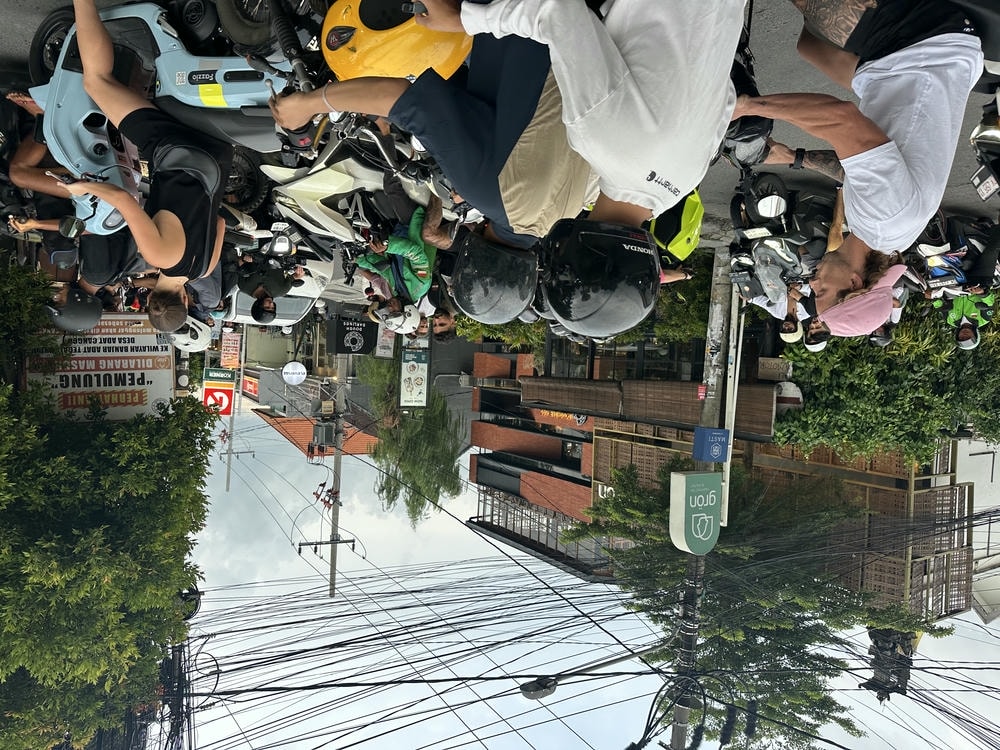
When traveling, transportation in Bali generally falls into four categories. If you are traveling as a family, I highly recommend a Private Car Charter; if you are an experienced backpacker, you can consider renting a scooter; for general travel, a mix of Car Charter + Ride-hailing Apps works well. Below are the pros and cons of each method included in this Bali travel guide.
- Private Car Charter
- The most convenient way to travel. Daily rental is about IDR 500,000-800,000 (approx. USD $32-$52).
- You can customize a full-day itinerary. Usually, a day is 10 hours, with extra charges for overtime.
- I did some research and found a local Balinese driver. I was very satisfied with the experience. If you are interested, you can check out this post and contact him via WhatsApp.
- If you prefer English/Chinese booking services, you can book via KKday or Klook, though prices are usually slightly higher than booking directly with locals.
📌 Bali Car Charter: KKday |Klook
- Scooter Rental
- Economical. Daily rental is about IDR 50,000-70,000 (approx. USD $3.20-$4.50).
- An International Driving Permit is required.
- Traffic and road conditions in Bali are chaotic. Beginners should be extremely cautious; even local drivers say you need to be very careful!
📌 Bali Scooter Rental: Klook
- Ride-hailing Apps
- Grab and Gojek apps provide local ride services, similar to Uber. For short distances, you can order a motorbike taxi (ojek), which is cheaper.
- Personally, I found Gojek generally cheaper, but there are fewer cars or wait times are longer.
- Some areas and hotel zones restrict online ride-hailing pickups to support local taxi mafias. In these cases, just walking a bit further away usually solves the problem.
- Shuttle Bus
- The Kura-Kura Bus connects major tourist areas.
- It runs on a fixed schedule with reasonable fares. You can buy tickets in advance.
Bali Attractions


Bali attractions are mainly divided into several regions, each with unique characteristics. Due to severe traffic jams in Bali, it is recommended to base your daily itinerary around your accommodation area.
- South Bali: Usually the first stop for tourists. It is the liveliest area with famous beaches, surf spots, cliff temples, and luxury resorts. Seminyak, Jimbaran (best sunset), Tanah Lot, and Uluwatu are all located here, suitable for those who love beach activities and a bustling atmosphere.
- Central Bali: Centered around Ubud, this is the cultural and artistic heart of Bali, featuring rice terraces, traditional villages, and religious sites. Here you can experience more of Bali’s traditional culture and art scene. Many spiritual yoga retreats are held here.
- East Bali: More primitive and quiet, offering excellent diving and snorkeling spots. The “Gates of Heaven” (Pura Lempuyang) and Tirta Gangga (Water Palace), famous Instagram spots, are also here.
- North Bali: You can hike Mount Batur and go dolphin watching at Lovina Beach.
Must-Eat Food in Bali
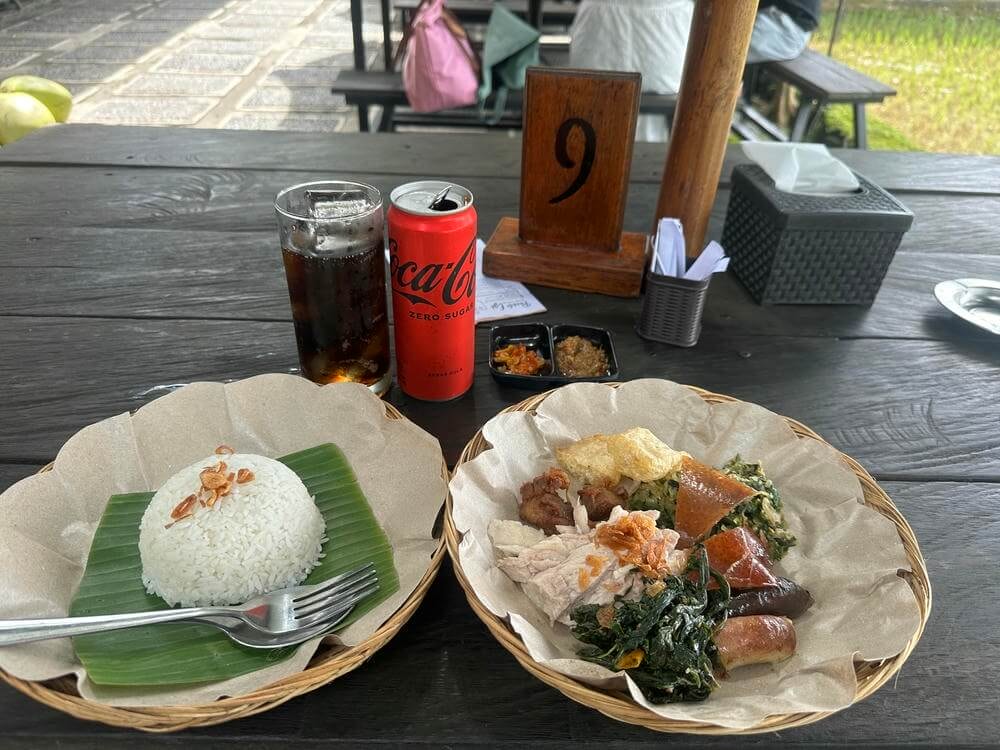
Bali’s food scene is actually quite palatable for international travelers. In most cases, it is delicious and cheap. Here are a few specialty dishes that are must-tries in this Bali travel guide! For a detailed introduction, welcome to check out my post with over 25+ Bali food recommendations!
- Babi Guling (Roast Pork): Similar to suckling pig, many restaurants near Ubud serve this.
- Nasi Goreng (Fried Rice): Indonesian-style fried rice, often served with eggs and chicken. You can find it in most restaurants and street stalls.
- Sate (Satay): Grilled meat skewers with peanut sauce. There are various meat options such as chicken, beef, pork, and sometimes fish.
- Mie Goreng (Fried Noodles): Indonesian-style fried noodles with vegetables and meat. Rich in flavor and super delicious.
- Bebek Bengil (Dirty Duck / Crispy Duck): Roasted or deep-fried duck, crispy on the outside and tender on the inside, usually served with rice and traditional sambal. Very common around Ubud.
Important Travel Tips for Bali
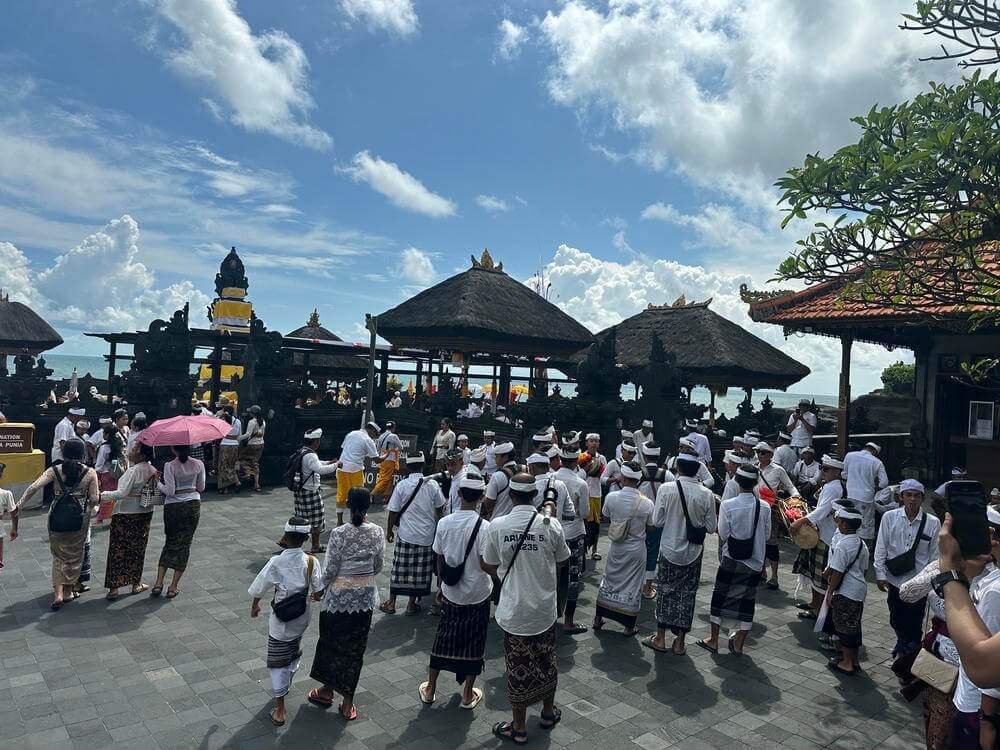
Since Bali is a region with a strong religious atmosphere, you must pay attention to local culture when traveling to avoid accidentally breaking taboos. Here are some observations and tips for your Bali trip:
- Temple Etiquette: Wear pants or skirts that cover your knees, or rent a sarong at the site. Some temples also prohibit women from entering during menstruation; please respect local culture.
- Offerings (Canang Sari): Most shops place small woven palm leaf boxes with flowers, incense, and food at their entrances every morning and evening for blessings. Be careful not to step on them when walking, as locals believe stepping on them brings bad luck.
- Mosquito Protection: There are quite a few mosquitoes. Use insect repellent to prevent dengue fever and other mosquito-borne diseases. You can buy some at local supermarkets.
- Drinking Water: Tap water in Bali is not potable. Those with sensitive stomachs might experience “Bali Belly,” which can cause severe vomiting and diarrhea. Unless you are in a restaurant, avoid buying street drinks with ice. Stick to bottled water. If you do get sick, local stomach medicine is rumored to be more effective than what you might bring from home; consult a local pharmacy.
Check some hot tours in Bali:
📌 Indonesia Bali | Custom Private Car Charter: KKday|Klook
📌 Mount Batur Sunrise Trekking by 4WD Jeep: KKday|Klook
📌 Bali Safari and Marine Park Tickets: KKday|Klook
📌 Nusa Lembongan & Manta Bay Snorkeling: KKday|Klook
📌 Uluwatu Kecak Fire Dance Tickets: KKday|Klook
📌 Nusa Penida Adventure Cruise: KKday
📌 Bali Airport Pickup SIM Card / eSIM: KKday|Holafly

